Human Risk Management
We don't just uncover risks; we provide solutions.
Our automated HRM platform transforms employees from targets into a proactive line of defense. It's powered by usecure. You can spend your entire security budget on technical defenses and still get breached by one employee clicking one link. That's not a failure of your tools — it's a gap your tools were never built to close. HRM is the layer that closes it.
of cyberattacks start with social engineering, not a technical exploit. (Verizon DBIR, 2024)
of breaches involve a human element. (IBM)
of organizations report shadow IT as an active risk. (Gartner, 2024)
projected HRM market by 2027 — this is where security budgets are already moving.
People are a risk category, not a training checkbox
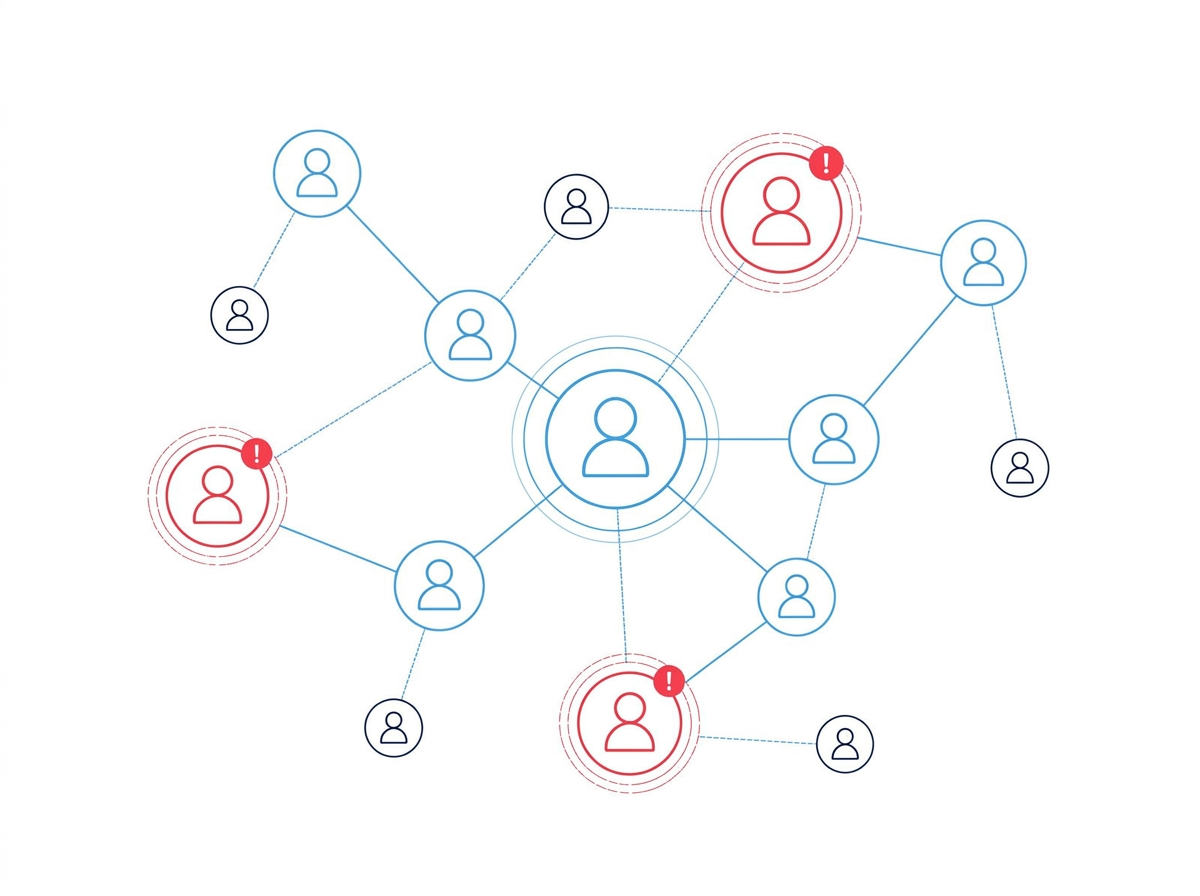
Just as you assess personal risk in everyday life, your business has to understand and manage the human element of its risk — deliberately, continuously, and with data, not a once-a-year compliance video nobody remembers a week later.
The framework
Identify → Train → Verify → Monitor

Identify
Automatically surface which employees are actually high-risk, based on real behavior — phishing simulation results, breached credentials, policy acknowledgment gaps — not guesswork.

Train
Deploy bite-sized, role-relevant training automatically to the people who need it, instead of the same generic course to everyone regardless of their actual risk level.

Verify
Run realistic, regularly-refreshed phishing simulations — templated and spear-phishing style — to test whether the training actually changed behavior.

Monitor
Track human risk as a score over time, the same way you'd track any other security metric, with audit-ready reporting instead of 'training completed' checkboxes.
What's included

Phishing simulations
Realistic, regularly-updated phishing simulations, including spear-phishing style campaigns.

Bite-sized training
Training assigned automatically based on individual risk — not blanket, one-size-fits-all courses.

Continuous risk scoring
Track human risk as a score over time, so you can see improvement instead of guessing at it.
Automated reporting
Enrollment, campaigns, and reporting run on autopilot — no second job for whoever owns IT.

Policy management
Audit-ready policy documentation and acknowledgment tracking for compliance reviews.
Why this is a security investment, not a compliance chore
Proactive risk reduction
Identify high-risk behavior and intervene before it becomes an incident, rather than finding out after.
Cost avoidance
The average breach costs millions; reducing human risk before it materializes is dramatically cheaper than responding after it does.
Easier compliance
Frameworks like GDPR and ISO 27001 increasingly expect a documented human-risk program, not just technical controls. Automated reporting means you're not assembling this by hand when an audit or a cyber-insurance renewal asks for it.
Cyber insurance leverage
Insurers are asking harder questions about proactive security posture before they'll write or renew a policy. A documented, running HRM program is evidence, not a promise.
Who this is for
If you own IT
You're already stretched thin. HRM runs on autopilot — automated enrollment, automated phishing campaigns, automated reporting — so it adds a real security layer without adding to your task list.
If you own the budget
This isn't 'training' — it's the cheapest form of breach prevention you can buy, and it's one of the few security investments with an easy ROI story: reduced incident risk, avoided breach cost, and smoother compliance and insurance renewals.
If you own compliance
This gives you audit-ready documentation and a defensible, ongoing program — not a single training event you have to explain away a year later.
Common questions
We already run security awareness training.
Most in-house or generic training programs measure completion, not behavior change. Ask yourself: do you know your actual phishing click-rate right now, and is it going down? If not, you have training, not risk management.
We're a small business, is this overkill?
BEC and phishing don't select for company size — they select for whoever responds. Smaller teams often have less redundancy when one person makes one mistake, which makes this more relevant, not less.
Isn't this another thing to manage?
No — it's built to run automated: enrollment, simulation cadence, and reporting all happen without manual admin work on your end.
Get your team's risk score.
We run a baseline simulation and show you where human risk actually sits in your business.
Request a Demo